Skip to content
Table of Contents
If you have been dealing with dark spots that just will not budge, you are not alone. Hyperpigmentation is one of the most common skin concerns people bring to a provider, and it is also one of the most frustrating. That is where VI Chemical Peel at Posh Aesthetics and Wellness fits in.
Why Does a VI Chemical Peel Outperform Serums for Dark Spots?
A VI Chemical Peel delivers a medical-grade blend of TCA, retinoic acid, and vitamin C deep enough to actually reach the pigment. A serum simply cannot replicate that level of results.
Why Hyperpigmentation Is Harder to Treat Than It Looks
Hyperpigmentation is not sitting on the surface of your skin waiting to be scrubbed away. It forms when melanocytes, the cells responsible for producing pigment, get triggered into overdrive.
Sun exposure, inflammation from a breakout, and hormonal shifts can all set this process in motion. The result is excess melanin deposited in the deeper layers of the skin, which is exactly where most OTC products cannot reach.
Post-inflammatory hyperpigmentation (PIH) from acne, sun damage, and melasma all share this same root mechanism, but they behave differently on the skin and respond to treatment at different rates.
This is why a single brightening serum rarely solves the problem completely. The pigment is simply too deep, and the active ingredients in drugstore products are typically not strong enough to disrupt the cycle at its source.
What a VI Chemical Peel Actually Does to Pigmented Skin
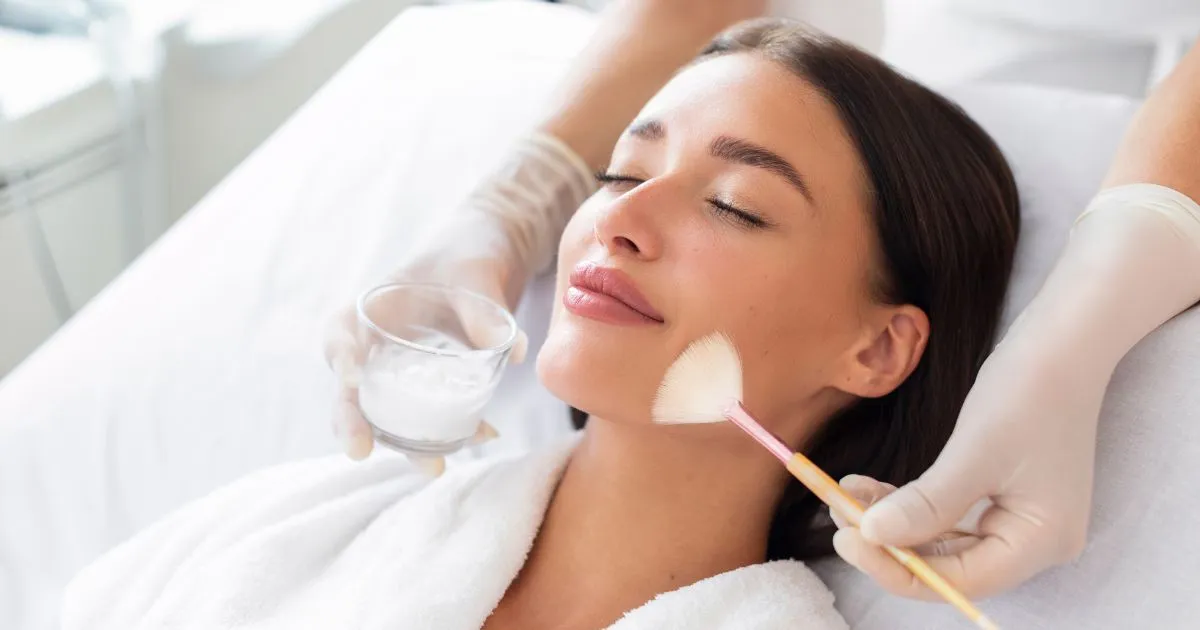
A VI Chemical Peel addresses hyperpigmentation by working at multiple levels simultaneously. The formula contains a blend of trichloroacetic acid (TCA), retinoic acid, salicylic acid, phenol, and vitamin C. Each ingredient has a specific role in the process.
TCA and phenol penetrate beneath the skin’s outer layer to reach the pigment-dense areas where dark spots reside. Retinoic acid accelerates cell turnover, pushing discolored cells out faster than they would shed on their own. Vitamin C works to interrupt melanin synthesis, which helps prevent new pigment from forming as the skin heals.
This combination approach is what sets a VI peel for post-acne marks and sun damage apart from lighter peels that only resurface the very top layer, when the concern is deeper pigmentation, depth of penetration, and ingredient synergy, both matter.
The VI Peel Formulas Designed for Pigmentation
Not every VI Peel formula is the same, and that is actually a good thing. For patients focused on hyperpigmentation, melasma, or UV damage, the VI Peel Precision Plus is the formula most providers reach for first. It includes a higher concentration of brightening agents and is specifically built to target stubborn discoloration.
That said, not everyone needs the Precision Plus formulation. Part of what makes a VI Chemical Peel in Reading, MA, at Posh Aesthetics and Wellness effective is that the treatment is matched to your skin and your specific pigmentation concern.
A provider assessment helps determine which formula fits your situation and what protocol makes the most sense for your skin tone and history.
What to Expect During and After a VI Peel for Dark Spots
The in-office portion of the treatment takes roughly 30 minutes. The peel is self-neutralizing, so no rinsing is required during the appointment. You leave with the peel on, and the process continues at home over the next several days.
Days three through five are typically when visible peeling begins. This is the skin releasing the damaged outer layers, where a significant amount of the pigment is concentrated. It can feel a little strange to watch, but the peeling is part of how the treatment works. As that layer sheds, the skin underneath tends to look noticeably brighter and more even-toned.
Most patients see clearer skin emerging within seven to ten days. The full result continues to develop over the following weeks as the skin completes its healing cycle.
What Results Look Like and How Many Treatments Are Needed
Most patients see a meaningful improvement in dark spots after a single treatment. For mild discoloration or VI peel for acne scars and post-acne marks, one session can produce visible results. For moderate pigmentation, melasma, or more significant sun damage, a series of two to three treatments spaced four to six weeks apart typically delivers the most consistent outcome.
It is worth noting that the type of pigmentation affects how quickly and completely results appear. PIH from breakouts often responds well and relatively quickly. Melasma, because it is hormonally driven, may require ongoing maintenance to maintain results. Our provider can help you realistically understand what to expect for your specific concern.
One important note: VI Chemical Peel has been formulated to work across a wide range of Fitzpatrick skin types, making it a strong option for patients with medium to deep skin tones who may not be candidates for more aggressive laser treatments.
Who Is a Good Candidate for VI Peel Hyperpigmentation Treatment
This treatment works well for people dealing with sun damage, post-acne dark marks, uneven skin texture, or early-stage melasma. If skin texture improvement treatment is part of your goal alongside pigmentation correction, a VI Peel addresses both concerns at once.
There are some situations where timing or health factors matter:
- Active skin infections or open breakouts should resolve before treatment
- Pregnancy is a contraindication
- Recent significant sun exposure or waxing may require a short waiting period
- Certain retinoids need to be paused ahead of the appointment
A consultation at Posh Aesthetics and Wellness is the clearest way to determine whether you are a good fit and when the right time to schedule would be.
Common Questions About VI Peel & Hyperpigmentation
- Does a VI Peel hurt? Most patients experience mild tingling or a warming sensation during the application. It is generally well-tolerated.
- Can I wear makeup while I am peeling? During the active peeling phase, typically days three through five, it is best to avoid makeup and let the skin move through the process without interference.
- How do I keep pigmentation from coming back? Consistent sun protection is the most important step. Daily SPF use, even on cloudy days, significantly slows the recurrence of UV-driven pigmentation. Maintenance peels and provider-recommended topical brighteners can also extend results.
- Will one treatment be enough? For mild concerns, it is possible. For moderate pigmentation or melasma, a series is the more reliable path to lasting improvement.
Glow Up Your Skin
At Posh Aesthetics and Wellness in Reading, MA, the team is here to help you find real solutions for stubborn skin concerns. Whether you are dealing with sun damage, post-acne marks, or uneven tone, a VI Chemical Peel may be exactly what your skin needs. Book your VI Chemical Peel consultation today!